
Instrument Build Orders Closed
I am not taking orders for any new builds. I don't have the bandwidth to cover all of the work I currently have on so have made the call to close orders for new guitars. Sorry about this but I felt this was something that I had to do.
If you're definitely interested in buying a Haze instrument, you can enter your email below and I'll contact you regarding an order if anything ever changes (although there are no plans for that).
Customisable options
Remember that each Haze model is customisable. The specification listed for each is 'standard' but much of it can be tweaked to better fit you. Pickups, finish, neck-carve, wood-choice, hardware—all of these things are open to alteration.
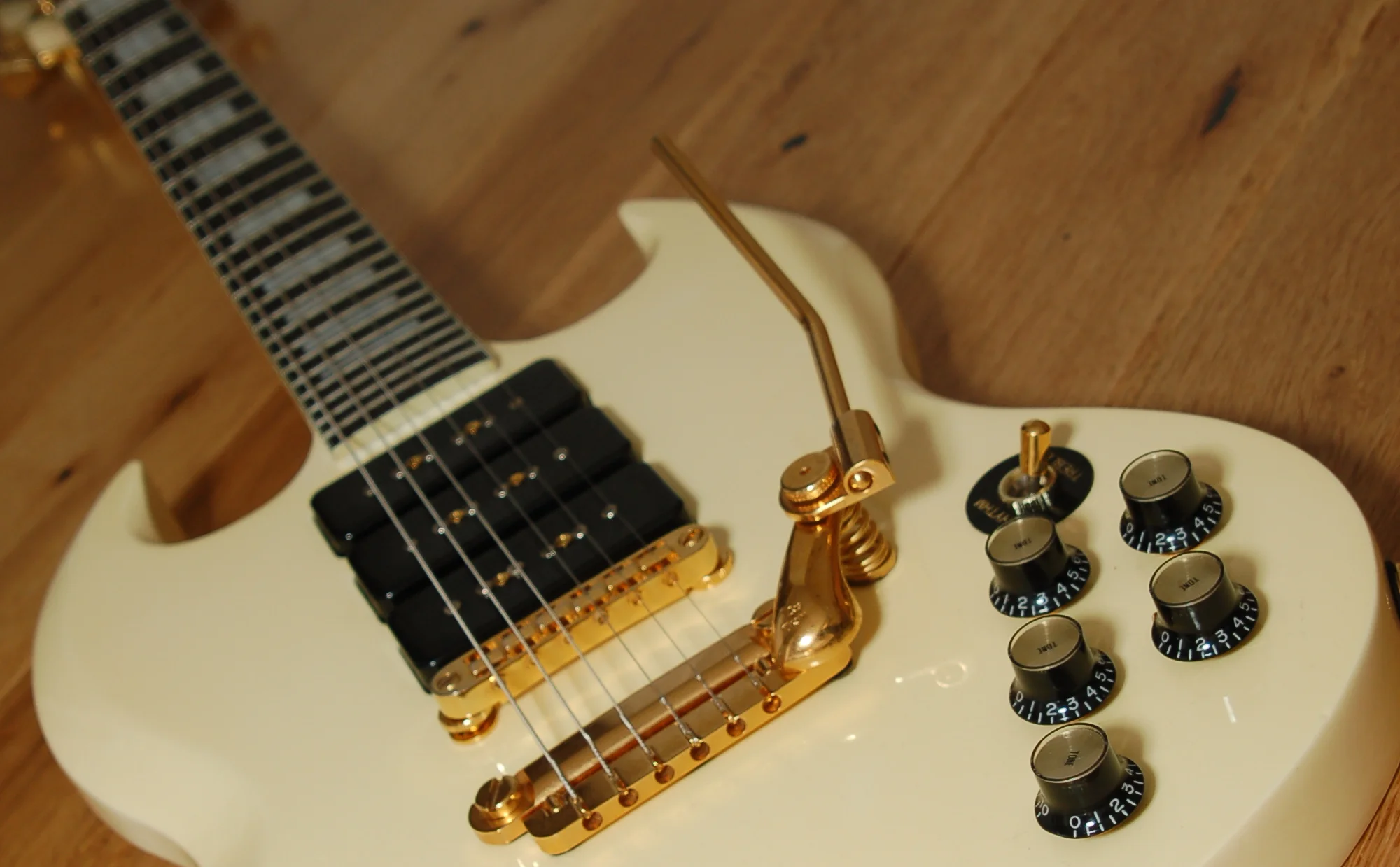
Things like pickup choice are among the easiest and most common customisation. The Blue Collar, for instance comes with a Duesenberg Domino pickup as standard. This is a stonker of a pickup but, if it doesn't suit your style, bung in a humbucker. Or add a neck pickup.
It's your guitar, it's custom, it's up to you.
Fully bespoke instruments
I no longer offer fully bespoke or one-off instruments. Building a one-off instrument is a mixture of great fun and enormous hassle. It's a massive amount of work and, right now, I feel that time is better spent on my own instrument range and on my books.





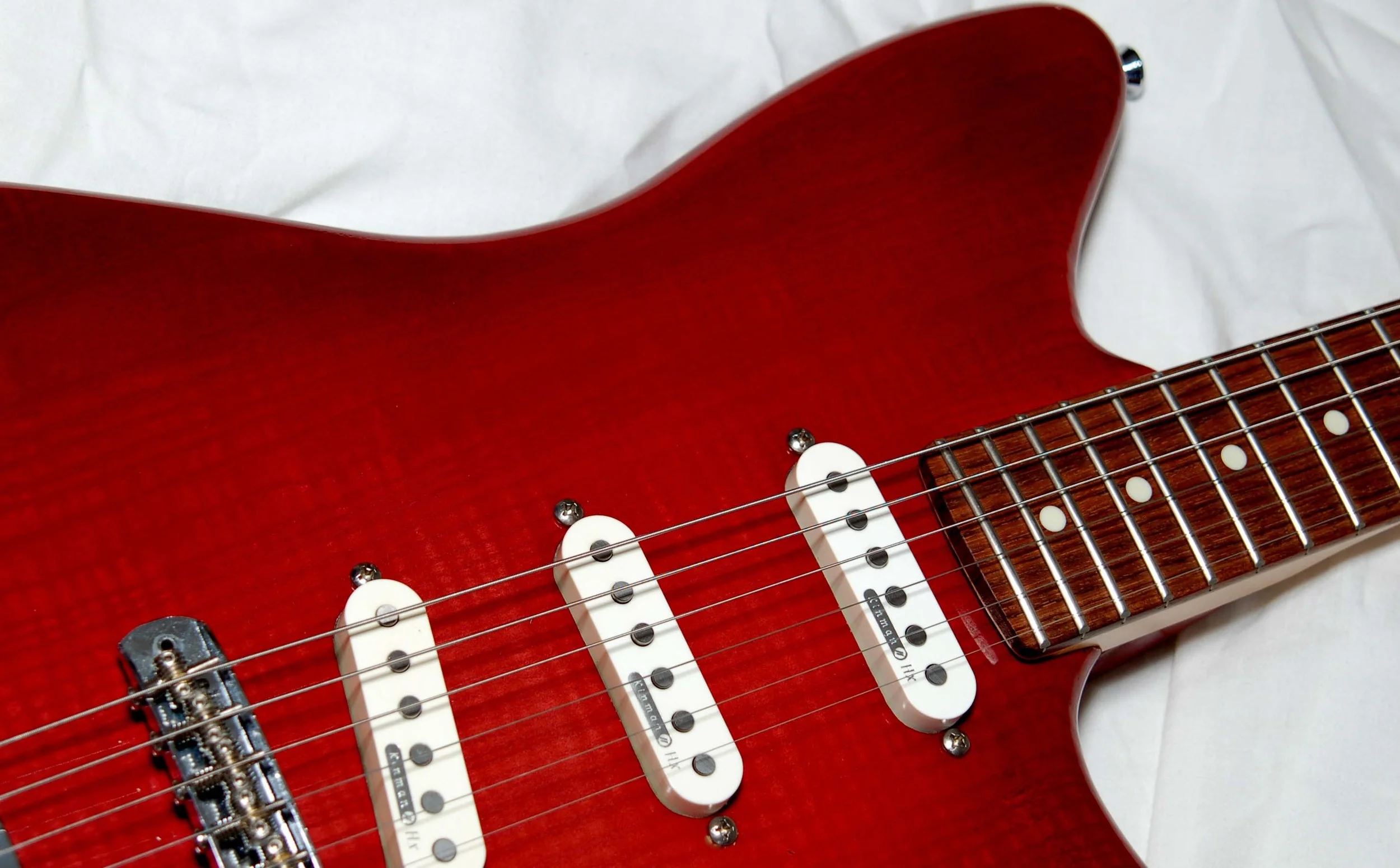

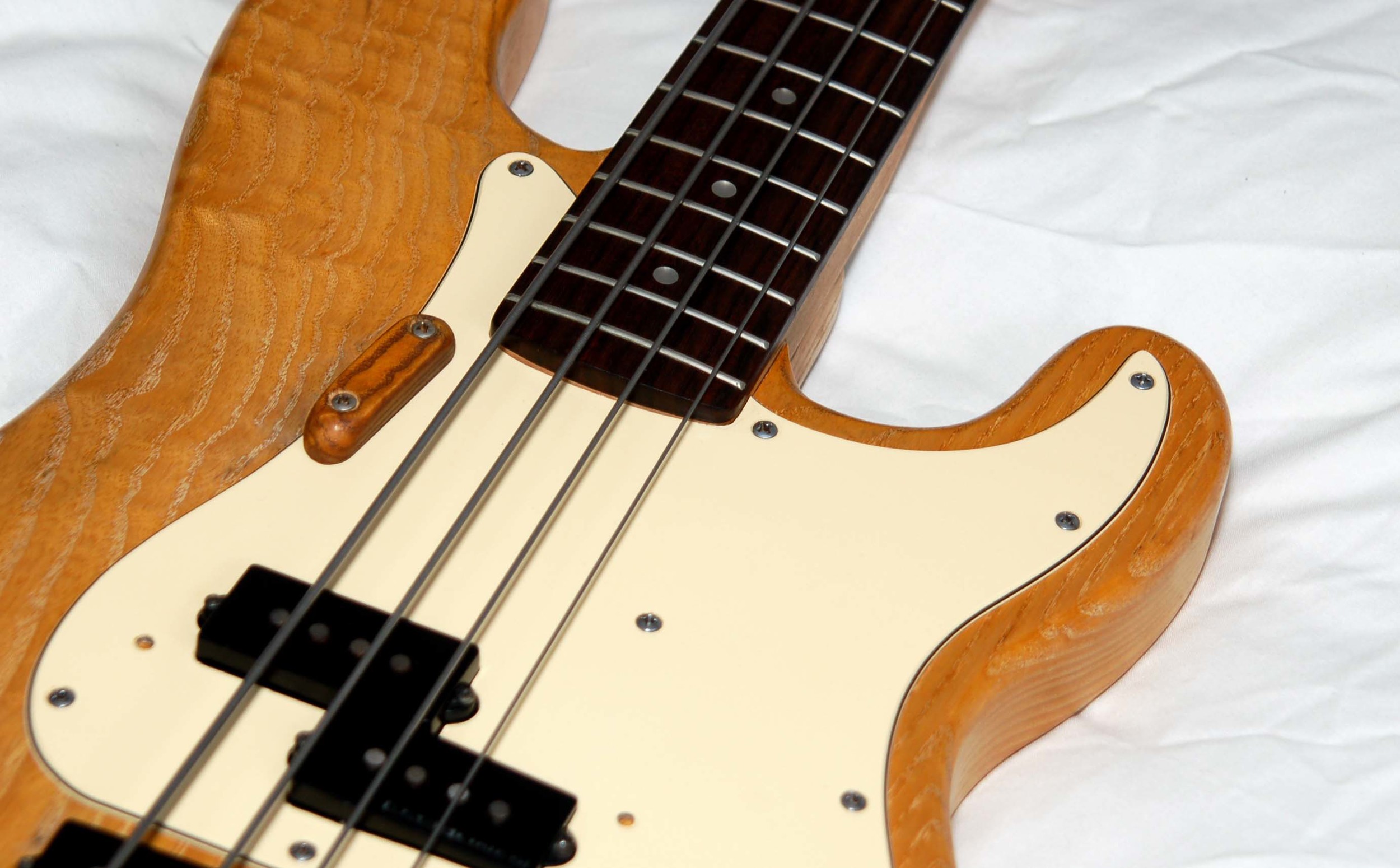


Haze Bassmaster 6
The Bassmaster 6 probably deserves a section of its own. While I don't offer it as a 'standard' model, I've built enough that I should probably consider doing so.
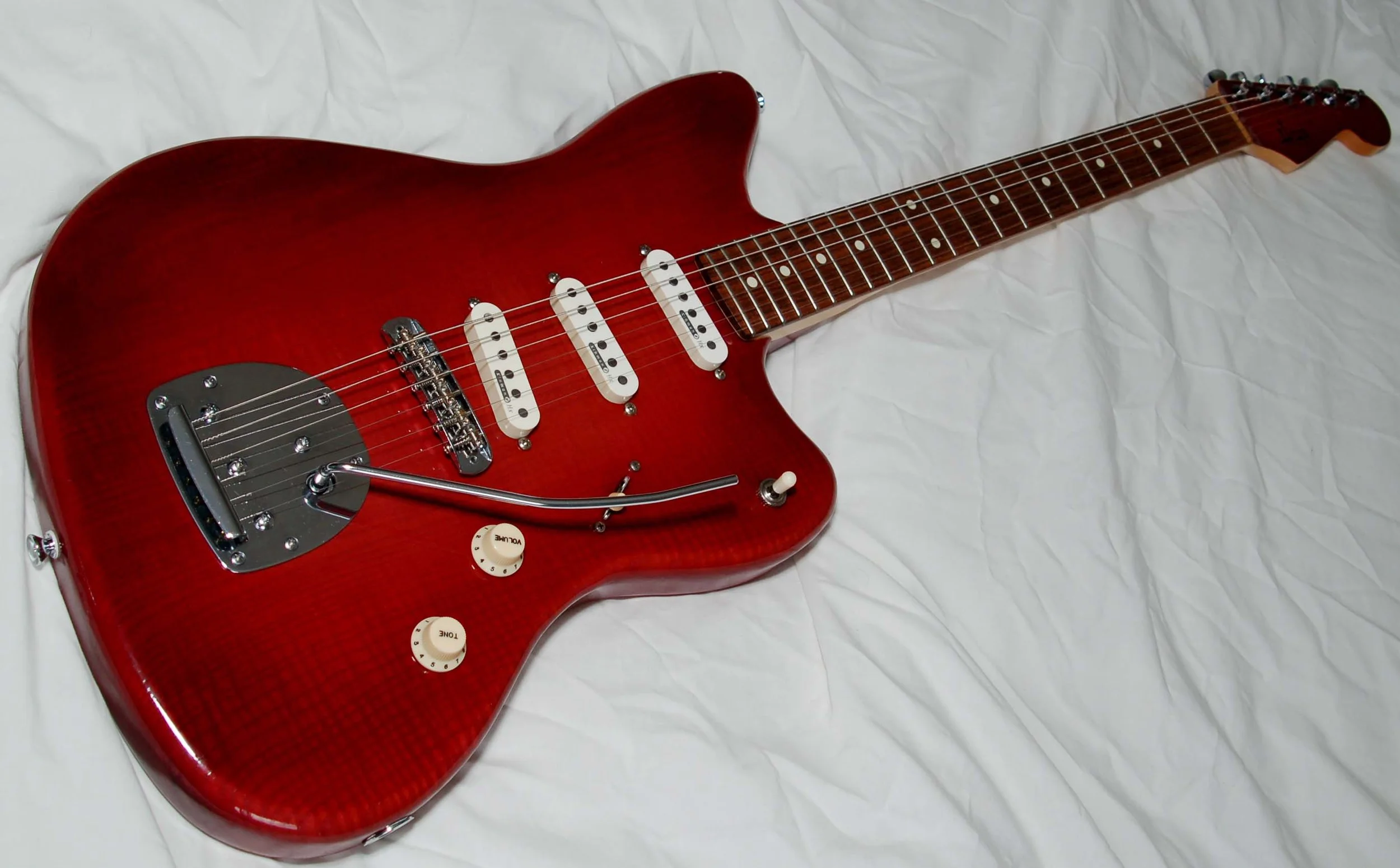
The Bassmaster 6 takes six-strings down an octave with thirty, delicious, inches of bass goodness. Yep, it's my take on everyone's favourite, six-string bass.
It’s not that easy to find a short-scale, six string bass. One with a vibrato narrows the search even more and good examples of such a rare beast are few and far between. Check out this though: This is the Bassmaster 6.
An ash or alder body and a graphite-reinforced maple neck—we’re talking solid here. That ebony board imparts a little warmth to the tone but the Bassmaster has a clarity that you don’t often find in a 30″ scale bass.
With an extra couple of strings and three, individually switched, single-coil pickups to play with, the Bassmaster 6 is chock-full of great tones. Everything from Jack Bruce to Glen Campbell—passing Robert Smith along the way—is catered for.
The Bassmaster 6 plays and feels very like a guitar. It can open up new worlds of experimentation for the seasoned bassist or can help introduce guitarists to the pleasures of the low-end—surely not bad things.